


Electric Vehicle Charging Station Contractor in Tonbridge & Maidstone
NICEIC-approved EV charge point installation for homes and businesses across Tonbridge, Maidstone, and the wider Kent area.
An EV charging station contractor designs, wires, and certifies the dedicated circuit and charge point needed to safely charge an electric vehicle at a property. GW Property Maintenance Ltd, a NICEIC-approved electrical contractor based nearby in West Malling, installs EV chargers across Tonbridge and Maidstone, fitting wall-mounted or freestanding units wired on their own protected circuit and tested to the specific standards that apply to EV charging equipment.
- 5.0 Google reviews (7)
- West Malling based
All 5.0 stars Google reviews
EXCELLENT Based on 7 reviews
 Posted on Google
 Ian FowleGary has done 3 jobs for us the past year,and has always been very pleasant and efficient nothing to much trouble.Would definitely recommend.Posted on Google
 James ProffittI first met Gary several years ago when I needed some additional power sockets installing. Based on that first positive experience, I have since contracted him to complete a variety of jobs, including an air conditioning install, home EV charger install (Hypervolt), bespoke bathroom lighting and an emergency repair to a consumer unit (life saver at a weekend!). In all cases, the service has been excellent from start to finish. Everything was completed to an exceptionally high standard, with great attention to detail. Gary is professional, punctual and takes time to explain everything clearly. He takes real pride in his work and genuinely cares about delivering a high quality service. I wouldn’t hesitate to recommend him to anyone looking for a reliable, skilled, and trustworthy electrician. I’ll definitely be using him again for any future electrical work.Posted on Google
 RichWe have used Gary's services numerous times. The latest project was a plant room installation where the gas boilers were being removed and replaced by heat pump renewable technology. His work is brilliant and has an eye for detail. Job completed as per the programme and we received all the relevant certification on completion. Perfect 👍Posted on Google
 Gary EnglishGary turned up when he said, Infact he phoned up and said he was running early so was it OK to come round now. So comunication was good . His price was good and he supplied and installed what he said he would. Clean and tidy . Polite. Would recommend him to others.Posted on Google
 Lisa DennisA friend highky recommended Gary. Excellent service from him , from inital contact to job finishing. He let me know all the way through what he was doing. Very polite and repectful to our property. Nothing is too much trouble. His quotes are extremely competitive.Posted on Google
 Jacqui PeacheyI found Gary on a google search when we were having issues with our garage electrics. He fitted us in the same day and was very thorough trying to find the cause of the problem. I would definitely recommend and wouldn’t hesitate to use againPosted on Google
 Ellie BruceGary has been brilliant. He was really responsive, did a great job and kept me informed throughout so I understood exactly what was happening. He also went above and beyond helping to check and resolve a couple of pre-existing issues, which I really appreciated. Everything was done properly and left tidy afterwards. As a parent with two young children in the house, it was also really important that I felt safe and comfortable with the work being done and Gary was professional and trustworthy throughout. I’d definitely recommend him and will use him again in future.
Standards & equipment we use
Every EV charging installation across Tonbridge and Maidstone follows BS 7671 18th Edition wiring regulations, including Section 722, the specific part of the regulations covering electric vehicle charging equipment. Circuits are tested using calibrated Megger multifunction testers, and chargers are fitted with the correct RCD or RCBO protection for the charger’s rated output, typically 7kW for a single-phase home charger. Earthing arrangements are checked against the requirements for EV charging points, since some properties need additional earthing measures (such as PME earthing restrictions) addressed as part of the installation. As a NICEIC Approved Contractor, all EV charging installation work is self-certified under the Part P Building Regulations scheme.
BS 7671 (IET Wiring Regulations, 18th Edition)
All installation work is carried out to the current UK wiring regulations.
Part P Building Regulations
Notifiable domestic electrical work is carried out and certified in line with Part P.
Calibrated multifunction testing equipment
Every circuit is tested before sign-off, not just visually inspected.
Safe isolation on every job
Standard safe isolation procedure followed before any work begins.



What does an EV charging installation involve?
How an EV charge point is installed
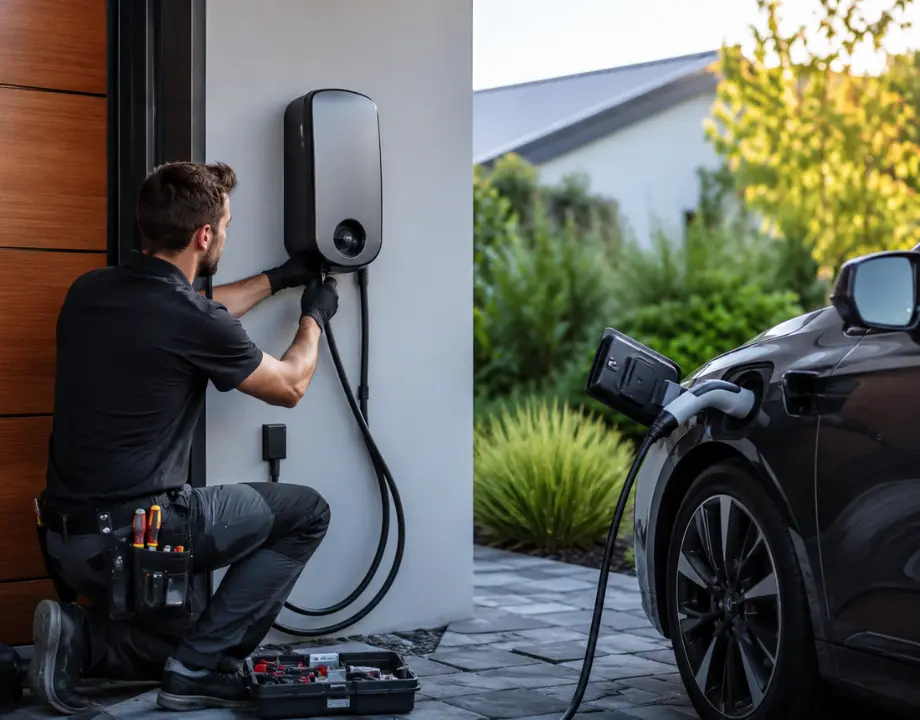
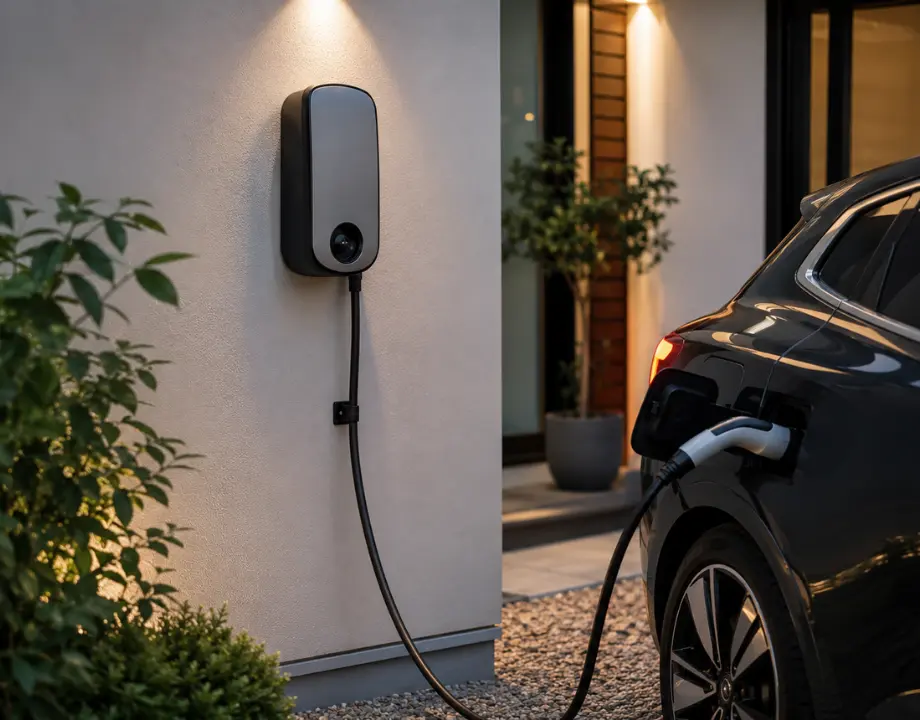
The contractor first assesses the property's existing electrical supply to confirm it can safely support the extra load an EV charger adds, then runs a dedicated circuit from the consumer unit to the charger's mounting position, whether that's a wall-mounted unit on the house or a freestanding post on a driveway or in a car park. The charger is wired with its own RCD or RCBO protection, and where required, earthing arrangements are checked and upgraded to meet the specific standard for EV charging equipment (BS 7671 Section 722).
Why does an EV charger need its own dedicated circuit?
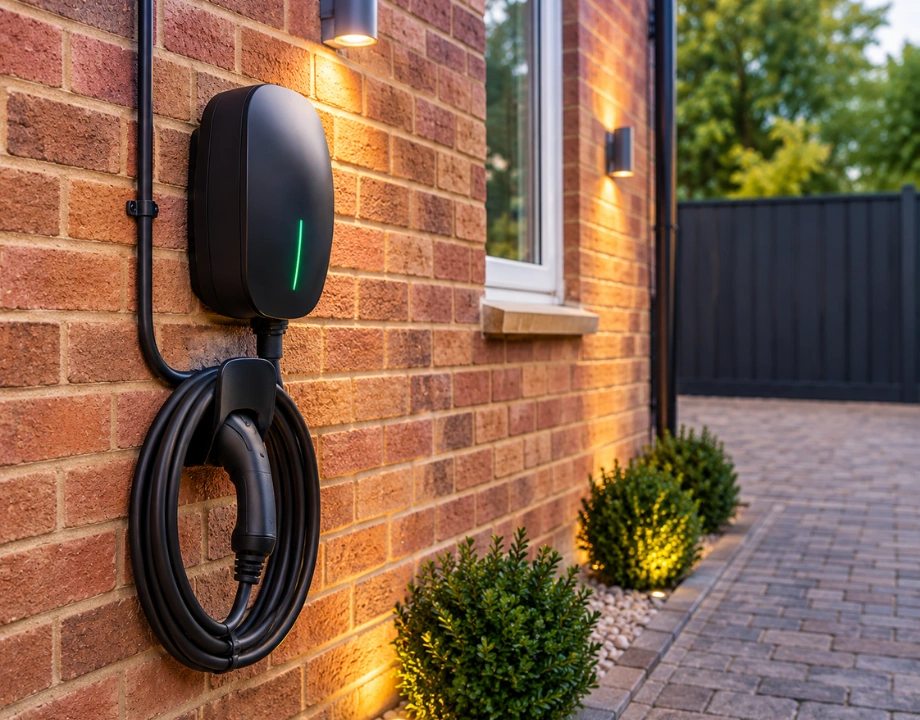
An EV charger draws a sustained, high current over several hours each time a vehicle charges, which is a very different load to a kettle or a washing machine switching on briefly. Wiring it into an existing socket circuit risks overloading that circuit and tripping the consumer unit repeatedly. A dedicated circuit, sized and protected specifically for the charger, avoids this and allows the charger to run safely at its full rated output. This matters across the varied housing stock in Tonbridge and Maidstone, from Victorian terraces near the town centres to newer estate housing on their outskirts, where consumer unit capacity can differ significantly from one property to the next.
Our Electrical Installation services
Home EV Charger Installation
A home EV charger lets you charge overnight on your own driveway, wired on a dedicated circuit rated for the charger's full output. GW Property Maintenance fits home EV chargers across Kent, certified to BS 7671 Section 722 within 48 hours.
Commercial EV Charger Installation
A commercial EV charger installation supports staff, visitors, or customers charging on-site, from a single unit to a multi-bay car park setup. GW Property Maintenance installs commercial EV chargers across Kent, fully insured and NICEIC approved.
Workplace EV Charging Installation
Workplace EV charging gives employees a place to charge during the day, reducing reliance on public charge points. GW Property Maintenance designs and fits workplace EV charging across Kent, with circuits sized to suit single or multiple chargers.
Recent EV Charging Installation work
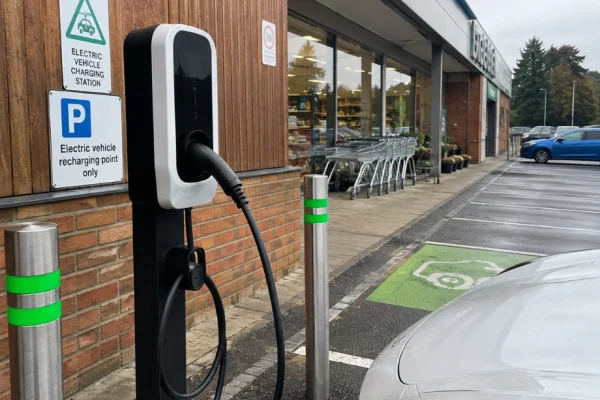
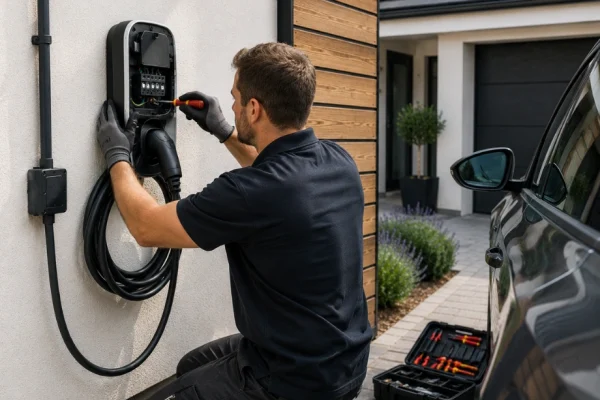
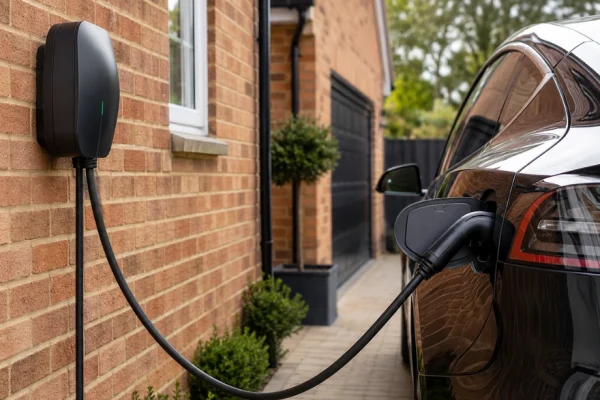
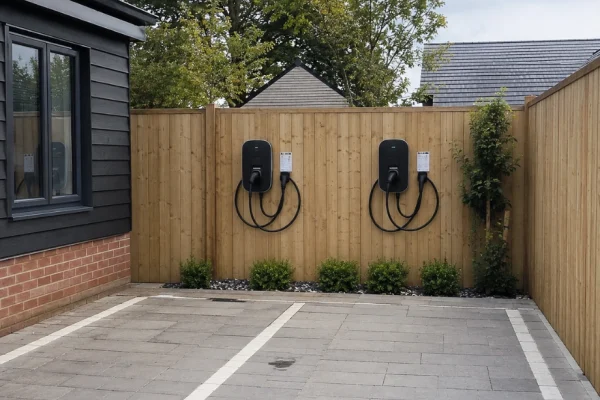
How it works
1. Free Site Survey & Written Quote
The electrician assesses the property's existing electrical supply, the distance from the consumer unit to the charger's proposed position, and any parking or cable-routing constraints, then provides a written quote.
2. Charger Selection & Circuit Design
The right charger and mounting position are agreed, and a dedicated circuit is designed and sized to suit the charger's rated output and the property's available supply capacity.
3. Installation
A dedicated circuit is run from the consumer unit to the charger, with the charger unit mounted, wired, and protected by its own RCD or RCBO.
4. Testing & Earthing Checks
The completed circuit and charger are tested against BS 7671 Section 722, including the specific earthing arrangements required for EV charging equipment.
5. Certification & Handover
A signed Electrical Installation Certificate is issued, and the charger is demonstrated on-site before handover.
Why choose GW Property Maintenance Ltd
What some electricians do
- Fit the charger without checking supply capacity
- Standard socket-circuit style installation
- Earthing arrangements not checked
- Certificate delayed for weeks
What GW Property Maintenance does
- Full site survey confirms the property can safely support the charger
- Dedicated circuit sized and protected specifically for the charger
- Earthing checked and addressed against BS 7671 Section 722
- Electrical Installation Certificate issued within 48 hours
What affects the cost of an EV charger installation?
The cost of an EV charging installation depends on the property’s existing electrics and how far the charger sits from the consumer unit. The main factors are:
- Cable run length — a charger mounted close to the consumer unit costs less to wire than one on a detached garage or a driveway further from the house.
- Consumer unit capacity — whether the existing consumer unit has spare capacity for the new circuit or needs additional work to accommodate it.
- Charger type and output — a standard 7kW home charger is generally more straightforward to fit than a higher-output or commercial multi-bay setup.
- Mounting position — a wall-mounted charger on the house is usually quicker to install than a freestanding post charger requiring groundworks.
- Earthing requirements — some properties need additional earthing measures addressed to meet EV charging standards, which adds to the scope.
- Single versus multiple chargers — a single domestic charger costs less overall than a multi-charger installation for a business car park.
A free site survey is the only way to give an accurate figure, since supply capacity and cable routing vary significantly from property to property.
Why homeowners in Tonbridge and Maidstone are installing EV chargers
More homeowners across Tonbridge and Maidstone are adding a dedicated EV charge point as electric vehicle ownership grows, since charging overnight at home on a driveway is generally more convenient and cost-effective than relying solely on public charging points. A correctly installed home charger also adds a practical, sought-after feature for anyone considering the resale value of their property.
Why local matters for this service
Tonbridge’s mix of older terraces near the town centre and newer housing further out sits alongside Maidstone’s blend of period properties and estates around Bearsted. An electrician who works across both towns understands when an older consumer unit needs attention before a charger can be safely added, and when a newer property already has the spare capacity to make installation more straightforward.
Standards and methods used
Every EV charging installation follows BS 7671 18th Edition wiring regulations, including Section 722 for EV charging equipment, uses calibrated Megger test equipment, and is self-certified under Part P, so the finished installation is both safe and legally compliant without extra council sign-off.
Get a free quote for your installation project
Frequently asked questions
An EV charger should be installed by an electrician competent in BS 7671 Section 722, the part of the wiring regulations specific to EV charging equipment, and ideally by a NICEIC approved contractor so the work is independently checked.
Yes. An EV charger draws a sustained, high current that an existing socket circuit isn’t designed to carry safely, so a dedicated circuit with its own protection is required.
Not always. It depends on whether the existing consumer unit has spare capacity. A site survey confirms this before any work is quoted.
A straightforward home charger installation is usually completed in a single day, though longer cable runs or additional earthing work can extend this.
Yes. Installations are carried out across Tonbridge, Maidstone, West Malling, Medway, and the surrounding areas, for both homes and businesses.