


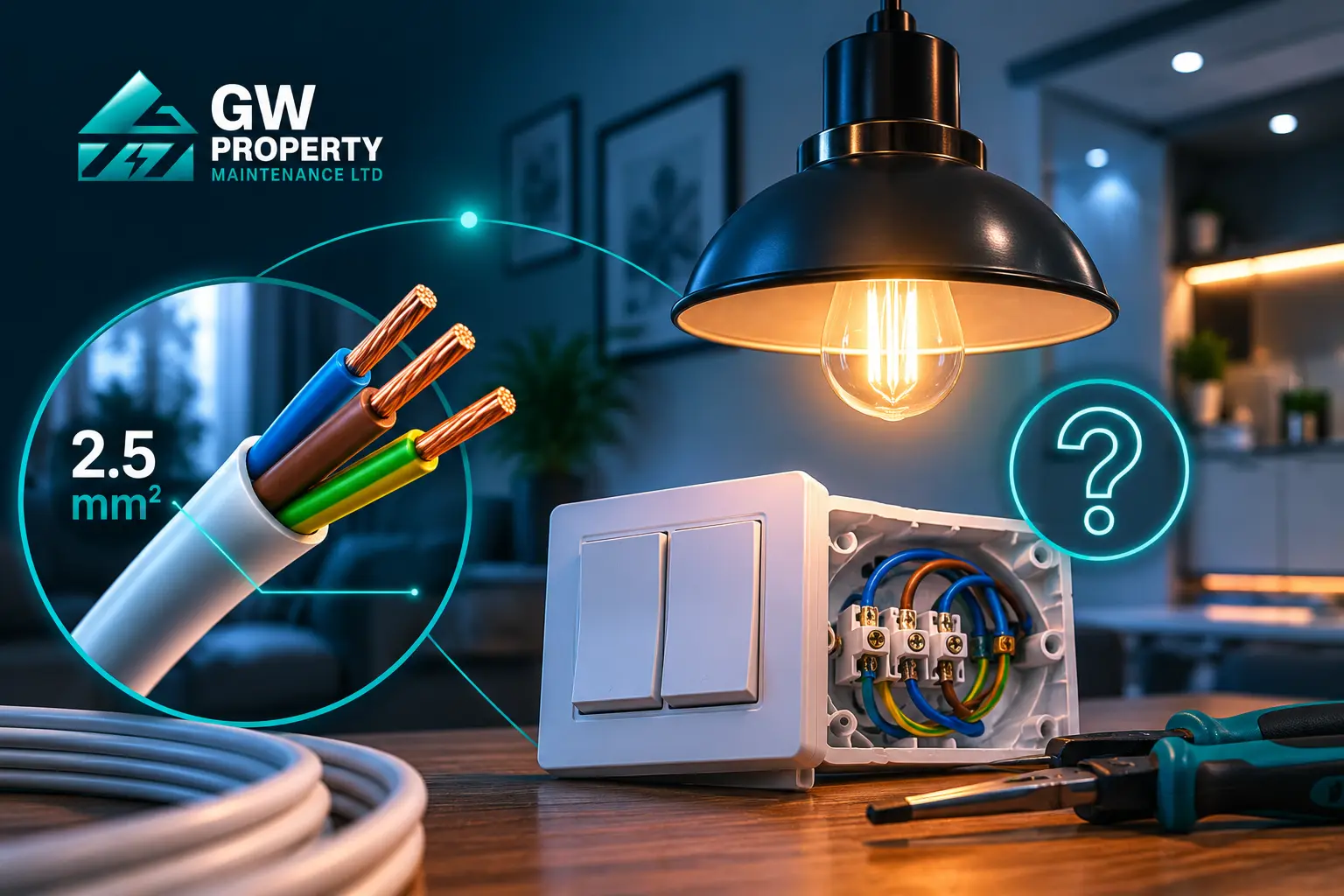
Can You Use 2.5 mm Cable for Lighting?
Introduction
If you are asking, “Can you use 2.5 mm cable for lighting?”, the short answer is yes. However, it depends on the type of lighting circuit, the breaker size, and the overall electrical design. Many homeowners also ask, “Can you use 2.5 mm cable for lights?” when upgrading lighting, adding LED fittings, or carrying out renovation work.
In most UK homes, lighting circuits usually use 1mm or 1.5mm cable. Even so, there are situations where a 2.5mm cable may be used safely and correctly. The key is making sure the installation follows current wiring regulations and is suitable for the electrical load.
At GW Property Maintenance Ltd, we help homeowners across Kent with safe and professional electrical services, including lighting installations, rewiring, fault finding, consumer unit upgrades, and LED lighting solutions.
What is a 2.5 mm Cable?
2.5mm cable is a common electrical cable size used in UK properties. It is most often used for:
- Ring main circuits
- Socket outlets
- Some radial circuits
- High-load applications
The cable is thicker than standard lighting cable. Because of this, it can carry more electrical current safely.
Can You Use a 2.5 mm Cable for Lighting Safely?
Yes, you can use 2.5 mm cable for lighting in certain situations. There is no regulation that says lighting circuits cannot use 2.5mm cable.
In fact, using a thicker cable can sometimes offer benefits, including:
- Reduced voltage drop
- Better durability
- Extra capacity for future upgrades
- Improved performance on longer cable runs
However, bigger is not always better. Lighting circuits are normally designed with smaller cables because lights use much less power than sockets or appliances. Using unnecessarily large cables may increase costs and make installation harder.
Can You Use 2.5 mm Cable for Lights in UK Homes?
Many electricians are asked, “Can you use 2.5 mm cable for lights in a house extension or renovation?”
The answer is yes, especially when:
- The cable run is long
- Multiple lights are installed
- Outdoor lighting is being fitted
- The circuit is designed as a radial
- Additional future load is expected
For example, garden lighting systems, garage lighting, and commercial lighting may sometimes use 2.5mm cable.
Still, every installation should be properly calculated and tested by a qualified electrician.
Standard Cable Sizes for Lighting Circuits
In the UK, the most common cable sizes for lighting are:
- 1mm twin and earth
- 1.5mm twin and earth
These are suitable for most domestic lighting circuits. So when homeowners ask, “Can you use 2.5 mm cable for lighting?”, it is important to understand that 2.5mm is not the standard choice for normal household lighting. That does not mean it is wrong. It simply means the circuit must be designed correctly.
Why Would Someone Use 2.5 mm Cable for Lighting?
There are several reasons why an electrician may choose 2.5mm cable for lighting.
Long Cable Runs
Longer cable runs can suffer from voltage drop. A thicker cable helps reduce this problem.
Outdoor Lighting
Garden and security lighting often cover larger areas. Using 2.5mm cable can improve performance and durability.
Future-Proofing
Some homeowners install larger cable sizes now to allow future upgrades later.
Mixed-Use Circuits
In some situations, lighting and other small loads may be part of the same design plan.
Can You Use 2.5 mm Cable for Lights With LED Lighting?
Yes, you can use 2.5 mm cable for lights with LED systems. LED lights use very little power compared to older halogen or incandescent bulbs. Because of this, 2.5mm cable is usually more than capable of handling the load.
However, the cable size must still match:
- The breaker rating
- Circuit design
- Installation method
- Building regulations
Even though LED lights draw less power, safe installation still matters.
Is a 2.5 mm Cable Too Big for Lighting?
Not necessarily. A lot of people searching “can you use 2.5 mm cable for lighting” worry that the cable might be too thick or unsafe. In reality, a larger cable is not dangerous if installed correctly.
The main disadvantages are:
- Higher material costs
- Harder installation
- Less flexibility inside ceiling spaces and back boxes
For simple lighting circuits, smaller cable sizes are often easier and more practical.
Breaker Size Matters
One of the most important factors is the circuit breaker.
Lighting circuits in UK homes commonly use:
- 6A breakers
- 10A breakers
Socket circuits often use:
- 32A breakers
If a 2.5mm cable is connected incorrectly to an unsuitable breaker or overloaded circuit, safety problems can occur. This is why professional design and testing are essential.
Can You Use 2.5 mm Cable for Lighting in Commercial Properties?
Yes. Commercial lighting systems sometimes use 2.5mm cable, especially in:
- Offices
- Shops
- Warehouses
- Outdoor commercial spaces
- Car parks
Commercial installations often have longer runs and larger lighting loads. In these cases, a thicker cable may be more suitable.
A qualified electrician should always assess:
- Load requirements
- Voltage drop
- Cable routing
- Safety regulations
Signs Your Lighting Circuit Needs Professional Attention
If you are planning lighting work, look out for:
- Flickering lights
- Tripping breakers
- Burning smells
- Old wiring
- Overheating switches
- Dim lighting
- Frequent bulb failures
These problems may point to incorrect wiring or overloaded circuits.
Can You Use 2.5 mm Cable for Lights During a Rewire?
Yes, during a full or partial rewire, electricians may decide to use 2.5mm cable in certain areas.
This may happen when:
- Installing outdoor lighting
- Upgrading garages
- Extending circuits
- Adding smart lighting systems
- Designing future-proof electrical systems
The correct cable size always depends on the full electrical design.
DIY Electrical Work vs Professional Installation
Many people researching “can you use 2.5 mm cable for lighting” are planning DIY electrical work.
Basic electrical tasks may seem simple, but incorrect wiring can lead to:
- Electric shocks
- Fire risks
- Failed inspections
- Damaged appliances
- Insurance issues
Professional electricians understand:
- BS 7671 wiring regulations
- Load calculations
- Circuit protection
- Safe installation methods
- Testing and certification
Using the wrong cable or breaker combination can create serious safety problems.
Why Choose GW Property Maintenance Ltd?
At GW Property Maintenance Ltd, we provide trusted electrical services across Kent for homeowners and businesses.
We can help with:
- Indoor lighting installations
- LED lighting upgrades
- Consumer unit replacements
- Full rewires
- Garden lighting
- Fault finding
- Commercial electrical work
- Electrical safety inspections
Our team focuses on safe workmanship, clear communication, and reliable service. Whether you are upgrading a single light fitting or planning a full property renovation, we can help you choose the correct cable size and electrical setup.
Final Thoughts
So, can you use 2.5 mm cable for lighting? Yes, you can. In many situations, it is perfectly safe and acceptable. However, it is not always necessary for standard domestic lighting circuits.
If you are also wondering, “Can you use 2.5 mm cable for lights?”, the answer depends on:
- The circuit design
- Cable length
- Lighting load
- Breaker size
- Installation environment
The safest option is always to speak with a qualified electrician before starting electrical work.
If you need expert advice or professional electrical services in Kent, contact GW Property Maintenance Ltd today. We are happy to help with lighting installations, rewiring, upgrades, and all types of electrical work.